
Whoa! I said it out loud when I first saw the gas estimate vanish mid-swap. Seriously? That gut-punch is familiar to a lot of us. My instinct said the wallet was about to lie to me, but then I realized the problem was deeper. Initially I thought wallets just needed pretty UI and good key storage, but then I dug in and saw the whole integration stack was the weak link for serious DeFi flows.
Here’s the thing. Wallets are the gateway. They mediate identities, sign transactions, and stand between your funds and a thousand unpredictable smart contracts. Medium-level users get that. Advanced users demand simulation, granular approvals, and clean cross-chain routing. They want predictability and the ability to test somethin’ before committing real capital.
Let me be blunt. Many wallets still treat dApp integration like a checkbox. They expose connect events, they forward signatures, and they hope for the best. That strategy fails when composability and MEV-sensitive flows are on the line. On one hand the dApp ecosystem craves frictionless UX, though actually that friction is often where safety checks and sane defaults belong.
Here’s why simulation matters. When a wallet can run a dry-run of a complex batch transaction against a forked state or a local simulation engine, you get two things: a confidence signal and a safety net. Confidence because you can inspect how gas will behave and which approvals are touched. Safety because you can detect reverts, slippage cascades, or unsafe allowance escalations before they happen.
Whoa! Small wins feel big here. Even a basic preflight that shows: “This call will attempt to increase allowance for token X to maximum” can stop a catastrophic approval. I’m biased, but approvals are still the single most recurring user-error vector in DeFi. I’m not 100% sure why UX hasn’t fully baked safer defaults yet, but it’s partly culture and partly tech debt.
Let’s talk integration points. dApps expect a provider, enriched RPC, and optional meta-signing flows. Wallets need to intercept, analyze, and optionally rewrite or warn. Medium-sized teams can build middlewares. Large protocols sometimes build custom wallets. Very few do both well. The best path is to treat the wallet as an active security appliance rather than a passive signer.
Check this out—there are technical approaches that scale. You can integrate transaction simulators that replay the exact call sequence on a forked state, capture internal calls, and map expected token movements. You can also layer heuristics that look for suspicious patterns: forceApprove, transferFrom loops, or contract upgrades inside the same transaction. These heuristics aren’t perfect. Actually, wait—let me rephrase that: they’re a lot better than no checks at all, and they let humans make better decisions.
How a multi-chain wallet should behave in 2026 (and a practical recommendation)
A good wallet needs three core capabilities: accurate simulation, granular permission management, and seamless multi-chain context switching. The simulation engine should show gas breakdowns and internal calls. Permission management must let you approve function-level scopes, not just token allowances. Multi-chain context switching should preserve transaction intent while routing through bridges or L2 relayers when appropriate, and avoid accidental chain mismatches.
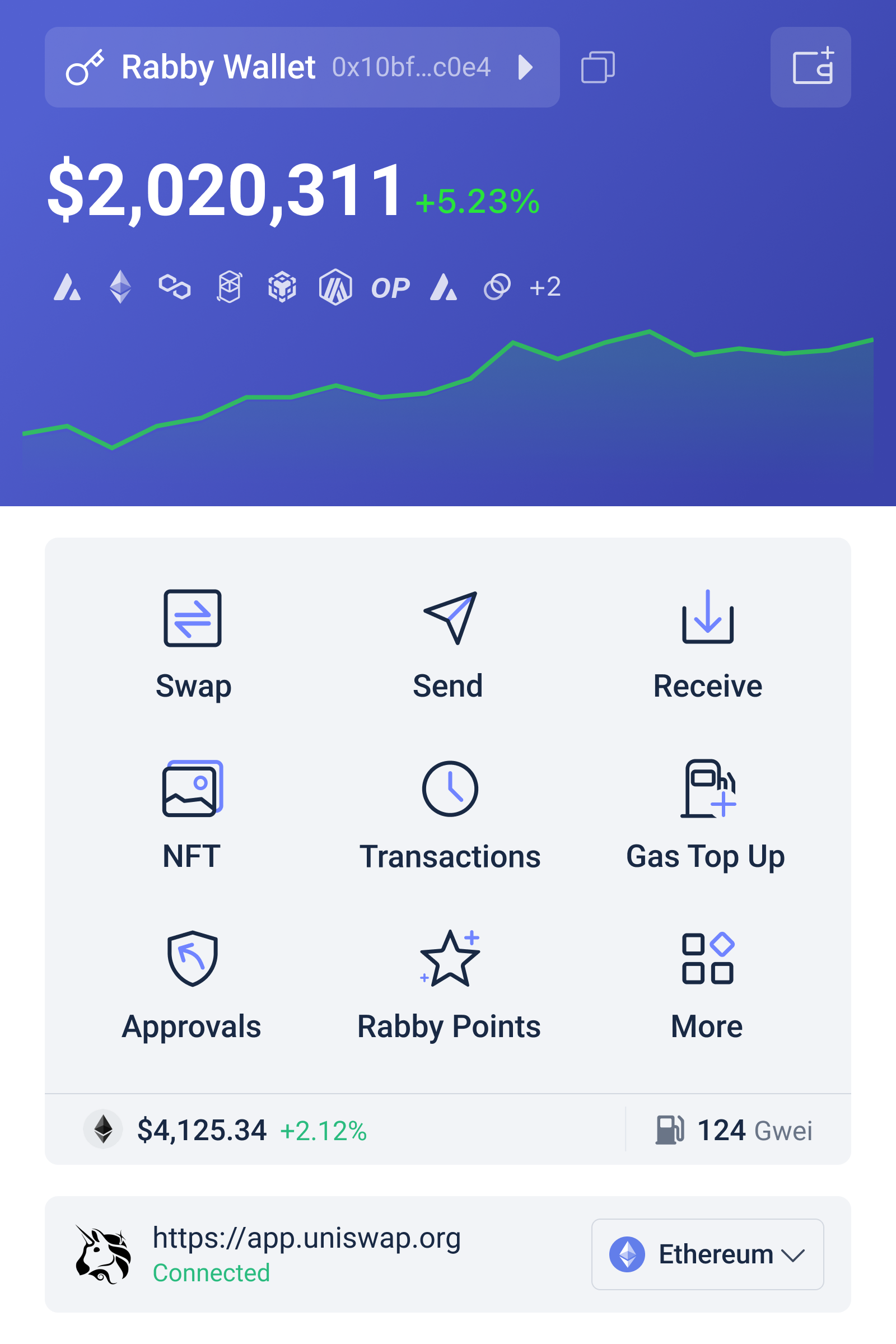
That’s why I keep recommending tools that put simulation and clarity front-and-center. For a practical example, see how some newer wallets integrate preflight checks and intuitive permission UIs—it’s a night-and-day difference for advanced flows. If you want a hands-on pick that leans into these features and invests in transaction clarity, check out https://rabby-wallet.at/—they’ve been building many of these primitives into the UX, and I appreciate their attention to pre-swap simulation and permission granularity.
Now, there are trade-offs. Simulating on-chain behavior requires either a remote service or a local fork. Remote sims raise privacy concerns because you reveal intent. Local forks are heavy on device resources. On one hand privacy can be traded for speed; on the other hand, running a local VM gives you the best privacy but costs more CPU. Choosing the right balance is a design decision—one that some wallets let you pick.
Hmm… there’s a human element too. Traders and builders often ignore mellow warnings. Composability creates temptation. You see a shiny APY, you feel FOMO, and you approve far too broadly. Something felt off about that early Uniswap migration approval I saw once. It had a blanket permission that could’ve let the contract move funds anywhere. I shouted at my screen—ok, maybe I cursed a little—and I messaged a friend to double-check the call data.
On the cognitive side, dual-system thinking matters. System 1 reacts: alerts, red flags, gut feelings. System 2 analyzes: bytecode inspection, simulation replay, replay-check of call traces. A best-in-class wallet should surface the System 1 cues without drowning the user, then provide System 2 tools on demand. Initially I thought a single-layer approach would work, but after walking through numerous exploits and near-misses, I realized layered interventions are required.
Design patterns that help: contextual warnings, reversible approvals, and transaction previews that show internal transfers and state changes. Also, allow batch rollbacks for complex flows when bridging intermediaries are involved. That’s not trivial engineering, but it’s doable. The teams doing this right embed sandboxed simulations and link the results back into the UI with clear, non-technical language for everyday users, and detailed traces for power users.
Here’s what bugs me about a lot of wallets: they either hide too much or drown you in raw call data. Neither helps. Give me summary heuristics first, then drilled-down traces if I want them. Allow me to set guardrails like maximum slippage, token spend caps, and automatic nonce checking to avoid race conditions. These are small features that prevent big losses.
We also need better multi-chain narratives. Bridges are fragile. Cross-chain swaps often require staged approvals and multiple confirmations across ecosystems. A wallet that pretends chain hops are seamless will break user trust. Instead, present chain transitions as distinct steps, simulate each step, and highlight the global failure mode—what happens if step two fails after step one succeeded? Those are the edge cases that bite.
Now a quick anecdote. I once tested a three-step arbitrage across an L2 and a Optimistic bridge. The UI showed one combined transaction with a single confirm button. My instinct screamed. So I scoped the calls, simulated them separately, and found that the bridge fee model could flip profitability mid-air. That simple simulation saved me from a marginal loss and a lot of shame. Lessons learned: marginal checks matter, and good tooling catches them.
So what should protocol teams demand from wallet integrations? First, a simulation API. Second, a permission model that supports least-privilege by default. Third, UX flows that make chain context explicit. Fourth, telemetry hooks so that wallets can warn about known malicious contracts without leaking user data. These are engineering asks, not marketing bullet points.
Common questions from DeFi power users
Can simulation really prevent MEV and sandwich attacks?
Not entirely. Simulation gives you a snapshot of expected behavior, which helps detect probable sandwich vectors and front-running paths, but it can’t guarantee protection in highly adversarial mempools. Use simulation paired with tooling like private relays or time-bandit-resistant routing for better results.
Is granular approval annoying for users?
At first, yeah. It adds clicks. But it builds muscle memory. Once users learn to approve per-use or set low caps, the marginal friction evaporates and safety improves dramatically. Also, good UX can make those options feel unobtrusive, and even helpful.
I’ll be honest. There are limits to what wallets can do alone. They rely on accurate RPCs, good relayers, and honest bridge operators. Still, wallets can shift the risk-reward balance meaningfully by making transparency and simulation standard. The ecosystem is slowly moving that direction, but there’s lots of plumbing left to do.
So, if you’re a DeFi user who cares about predictability, adopt a wallet that treats simulation and permission control as first-class citizens. If you’re building a dApp, demand those APIs from wallet partners and instrument your contracts for safer interactions. The more we normalize preflight checks and clear permission models, the fewer “oh no” moments we’ll see on-chain.
Okay. Final thought—this is a messy space and I love it. It’s messy because it’s new and powerful. It’s also human. We make mistakes. Good tools catch them. And really, that’s the point of building better wallets: to turn fast instincts into smarter choices. Someday soon, I hope we won’t have to scream at our screens anymore.